All Eyes on International Law: Protecting Frontline Workers Beyond Legal Frameworks
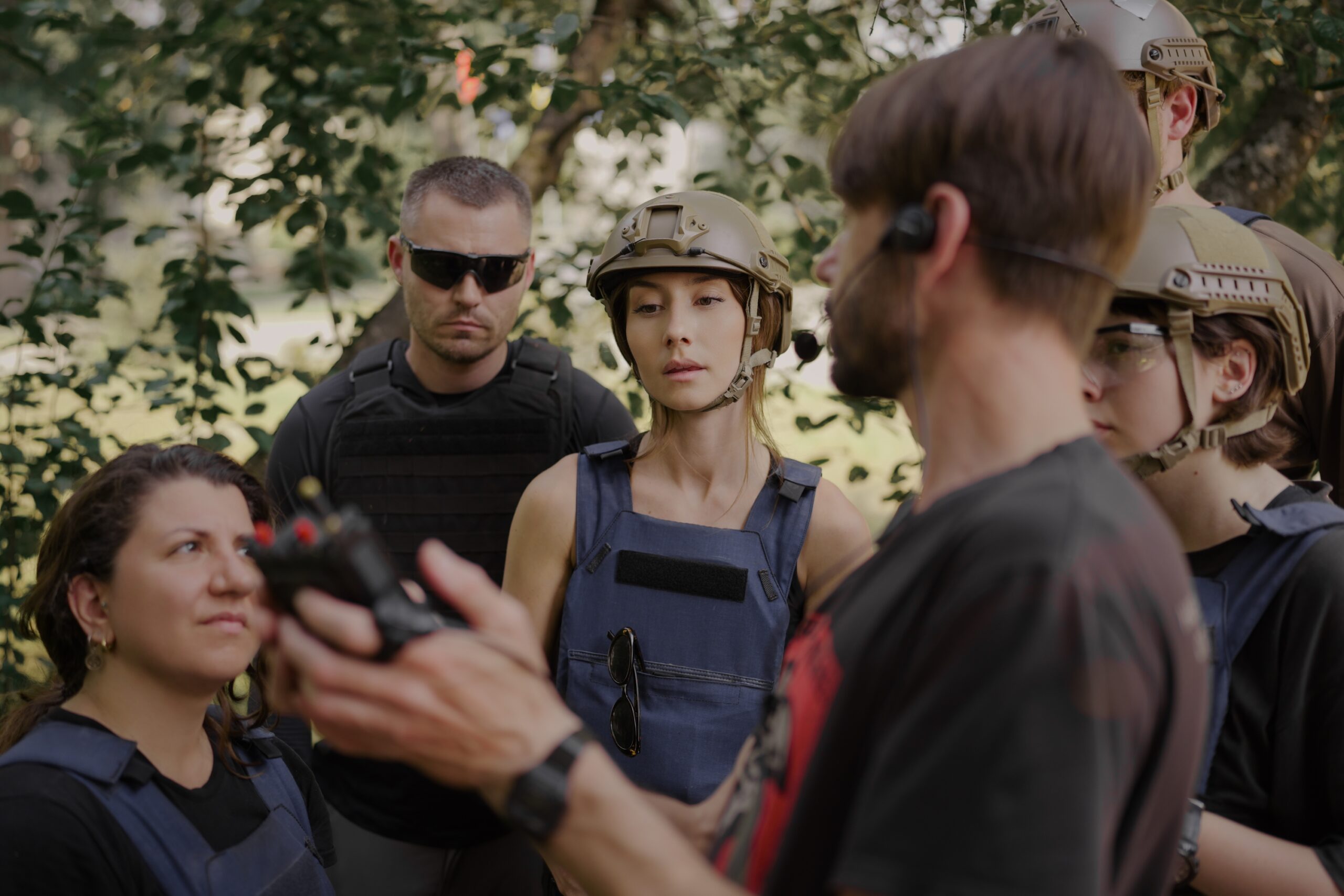
On 16 July, Daily Humanity hosted All Eyes on International Law: Frontline Perspectives + Discussion, bringing together journalists, international lawyers, investigators, and human rights experts to examine whether international humanitarian law is keeping pace with the realities of modern warfare.
As drones increasingly shape today’s conflicts, the discussion explored what this means for journalists, humanitarian workers, and other frontline professionals — and whether existing legal frameworks are capable of protecting them. We publish key takeaways from the discussion.
International Humanitarian Law Is Not Broken
One of the central conclusions came from international war crimes lawyer Nigel Povoas, who argued that the legal framework itself is stronger than many assume.
“International humanitarian law isn’t broken. The challenge is enforcing it within an international system that has significant political limitations.”
International humanitarian law already classifies journalists as civilians and prohibits deliberate attacks against them. The challenge, participants agreed, is accountability. Nigel also referred to UNESCO data showing that around 90% of journalists’ killings worldwide remain unresolved, highlighting the gap between legal protections and justice.
Drone Warfare Is Changing Frontline Reporting
Ukrainian war reporter and founder of Frontliner Media, Andrii Dubchak, described how the realities of reporting from the front often differ dramatically from what legal protections suggest. One of the discussion’s most practical insights was that visible PRESS markings do not always improve journalists’ safety. In some situations, they may even increase the risk of becoming a target. As Dubchak put it:
“On the front line, a blue bulletproof vest and a signed PRESS marking don’t protect you — they get you targeted.”
Instead, journalists increasingly rely on protective equipment, drone detection technology, physical readiness, preparation, and continuous risk assessment — illustrating how drone warfare is forcing newsrooms to rethink long-established safety practices.
Breaking the Cycle of Impunity
Aida Belloulid shared the story of her partner, French journalist Antoni Lallican, who was killed in a Russian drone strike while reporting in Ukraine on October 3, 2025. Reflecting on her pursuit of justice, she said:
“Previous unpunished Russian war crimes created a cycle of impunity that must be broken.”
She also described the practical barriers to prosecution back home:
“The decision to prosecute in France is based on evidence. If they cannot identify the chain of command — either the commander of the unit or the drone operator — they cannot prosecute.”
Her testimony highlighted that accountability is not only about justice for victims — it is also one of the strongest tools for preventing future crimes.
Accountability Requires Political Will
Legal expert Gleb Bogush concluded that today’s greatest obstacle is not the absence of legal rules, but the lack of political will and effective accountability mechanisms.
Participants discussed the importance of stronger investigations, better evidence collection, and closer cooperation between journalists, legal experts, civil society organisations, and policymakers. The discussion also highlighted the need for continued support for organisations documenting attacks against journalists and civilians, as accountability depends on reliable evidence gathered on the ground.
Looking Ahead
The discussion reinforced a clear message: protecting journalists and other frontline workers requires more than legal frameworks alone. As warfare evolves, effective protection depends on stronger accountability mechanisms, practical safety measures, international cooperation, and sustained support for those documenting violations in conflict zones.
At Daily Humanity, we believe conversations like All Eyes on International Law help bridge the gap between international law and the rapidly changing realities of modern conflict by connecting frontline experience with legal expertise and practical action.
more News