How To Prepare Your Team For A Volatile Environment
Since 2022, Ukraine has been under sustained attack — cities, infrastructure, hospitals, businesses of every size. None of that is new, and it hasn’t let up.
What has changed recently is quieter, but important: a large share of these strikes used to be intercepted before they reached anything. That is happening far less often now.
Why
Ukraine’s Patriot air defence relies on PAC-3 interceptor missiles that are in short global supply — the shortage worsened by parallel demand from other conflicts — and resupply arrives in small batches. Crews have had to ration interceptors, sometimes firing one at a target where two used to be standard.
In the first week of July 2026, Russia launched 49 ballistic weapons at Ukraine. Four were intercepted.
Where the gap is showing up
On 30 July a Nova Poshta sorting terminal was destroyed in Poltava. On 5 August a massed strike levelled the company’s sorting centre in Kyiv — three workers killed, eight injured; across Kyiv and the region that night, 17 killed and 44 injured. Since January 2026, logistics and warehouse infrastructure has been struck around 30 times.
Why this is relevant even if you are not “the front line”
If your work involves moving equipment or supplies through Ukraine, storing gear between deployments, or simply operating in a city you have assumed is relatively predictable — this shift affects you. Not because targeting has changed, but because less is being stopped before it lands.
The practical takeaway: whatever level of risk shaped your planning a year ago is not the level of risk you are operating under now. Do not assume a location, route or routine is as safe as it was the last time you checked it.
What the workshop covers
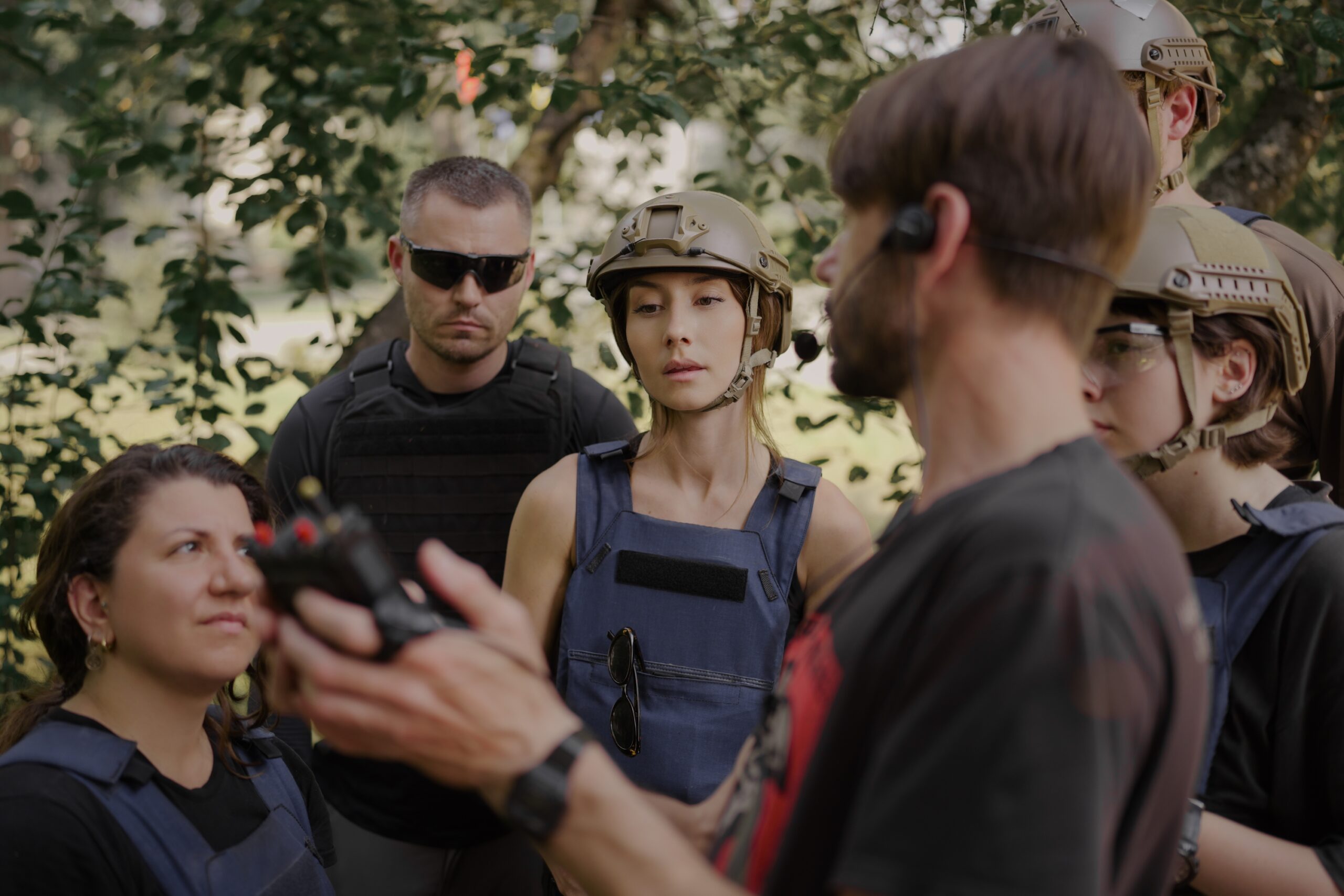
This is a hands-on session, not a lecture. We work through how to reassess your own operating picture: what your current risk baseline actually rests on, which assumptions have quietly expired, and how to keep recalibrating as the situation changes rather than running a risk assessment once and filing it.
Who it is for
Businesses and investors operating in Ukraine, defence tech teams, journalists, humanitarian and documentation teams — anyone whose people, equipment or supply routes pass through the country.
Who leads it
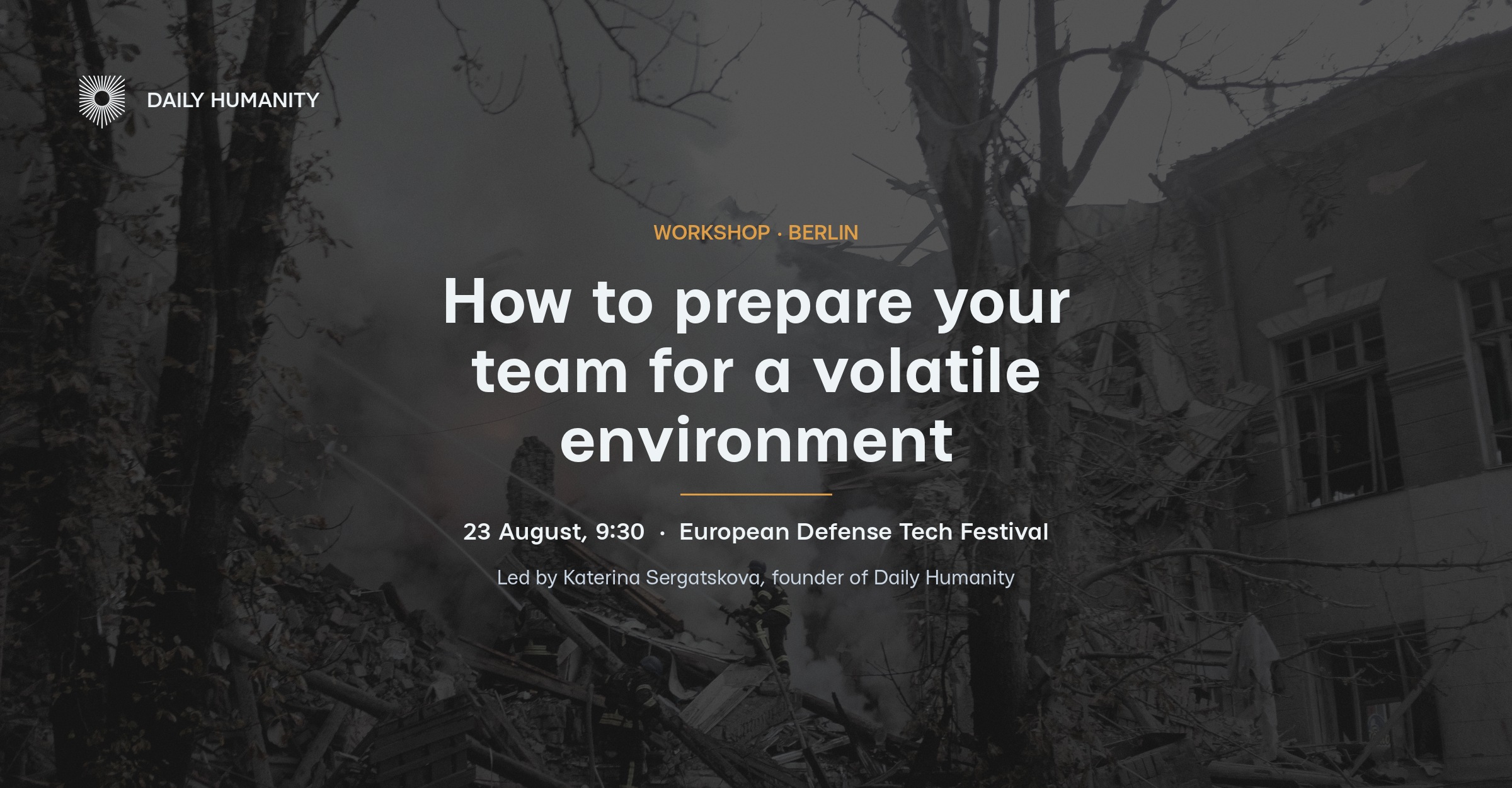
Katerina Sergatskova — risk manager and investigative journalist covering the war since 2014, founder of Daily Humanity, which has trained 4,000+ frontline workers and corporate teams, including teams from The New York Times and Dow Jones.
Details
- Date: 23 August 2026, 9:30
- Venue: European Defense Tech Festival, Berlin
- Format: hands-on workshop
- Language: English
more News