Trauma-Informed Leadership: How Ukrainian Media Professionals Are Learning to Support Themselves and Their Teams During the War

Trauma-Informed Leadership: How Ukrainian Media Professionals Are Learning to Support Themselves and Their Teams During the War
For over eleven years, including three years of Russia’s full-scale invasion, Ukrainians have been living under daily stress. For media professionals working with traumatic content, this is a double burden.
According to a study conducted by Daily Humanity as part of the Mental Resilience program, 95% of journalists in Ukraine admitted that they had experienced trauma as a result of their work, while 79% noted that working as a journalist causes them emotional harm.
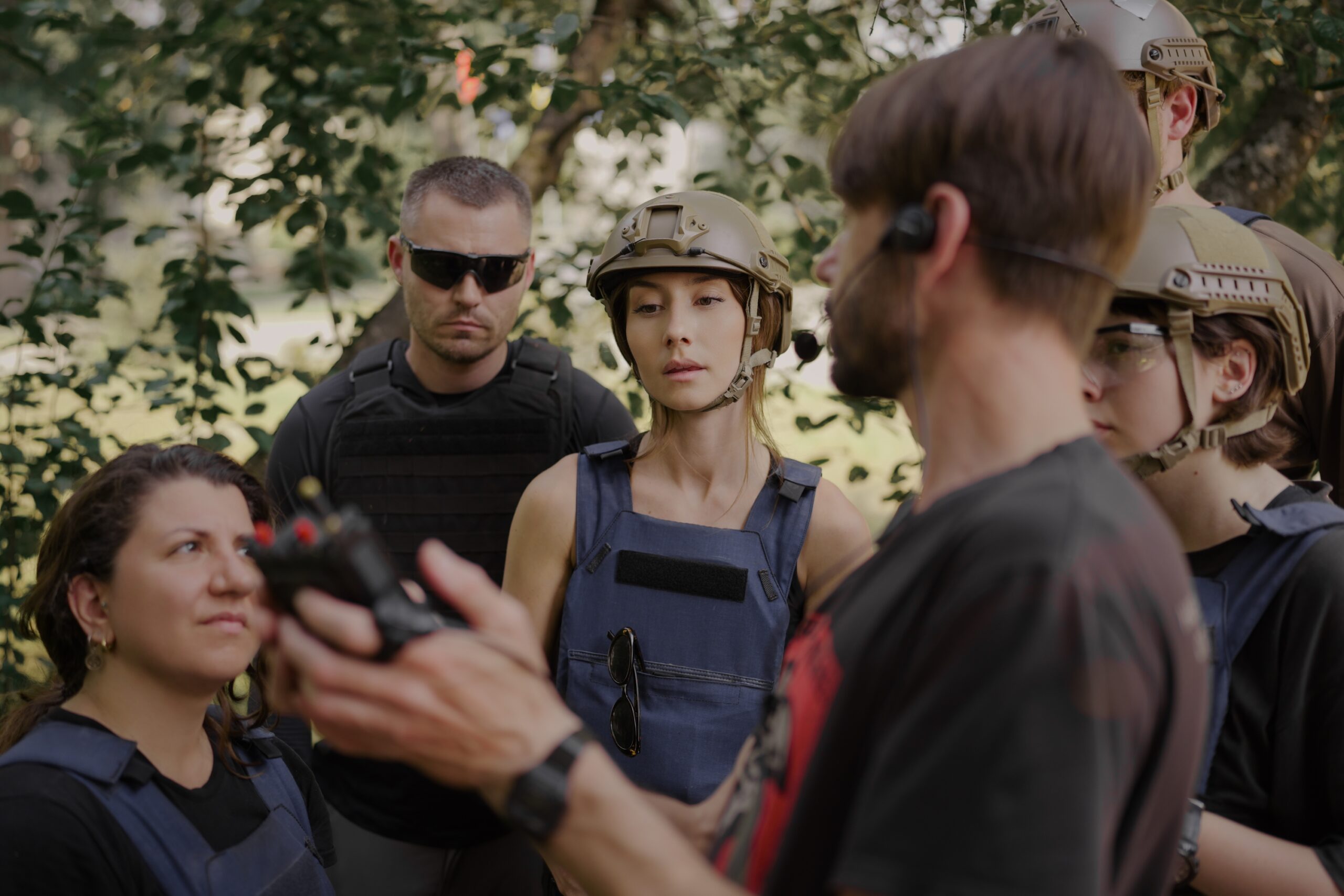
To help Ukrainian newsrooms build internal resilience and better support their teams, Dart Center Europe, in partnership with Daily Humanity, organized three training retreats in November–December 2024.
Not Just a Training, but a Safe Space for Reconsideration
These events combined educational sessions, strategic work, and space for recovery. Editors, journalists, psychologists, and HR managers participated.
“I really liked the format: a group of people with whom it was easy and comfortable. I trusted them, even though I hadn’t known most of them before,” says Lyubov Rakovytsya, Head of the NGO DII-Ukraine.
She applies the knowledge gained in her daily work and shares it with her colleagues: “The training helped me see and understand things I hadn’t thought about before — for example, the secondary trauma of newscasters, designers, and video editors who deal with traumatic news. The topic of combating online attacks and crisis communication was personally relevant for me. Here, I could share my own experience.”
Leadership in Times of Exhaustion
Kateryna Sergatskova, co-founder of Daily Humanity and author of the Mental Resilience Program says:
“I understood that human resources are not limitless: we will burn out and simply won’t be able to work anymore. Psychologists often tell journalists, ‘Oh, your job is so hard, you go through all the horrors of the war — maybe you should change professions?’ But we don’t want people to leave journalism. We want people to stay, to understand themselves, and to know how to help themselves,” says Kateryna Sergatskova.
“We adapted the Dart Center program on trauma and developed a risk management system for editorial offices that takes mental health into account,” adds Sergatskova.
Taking Care of Yourself Is Also a Professional Skill
Anastasia Isayenkova, news producer at Suspilne, says:
“For the past three years, I haven’t had time for myself. I couldn’t stop, think, or analyze my condition. Instead, I found time to offer some emotional support to journalists and editors. But will I be able to continue doing this if my psyche eventually says ‘enough’?”
The training helped her understand the importance of “first aid” for herself — before supporting others. She emphasizes:
“Our task as managers is to create conditions for people to work in a resourceful state. Will this change everything radically? No, but I will be an active listener for my colleagues and ask what exactly they need, and if it’s within my power, I’ll try to help.”
A Professional Conversation About Mental Health
Although Gavin Rees emphasized that this was not therapy, the opportunity to openly share emotions during work proved to be very valuable for the participants of the training.
“One of the main challenges is the word ‘trauma,’ which often causes resistance. We tend to perceive it as a pathology rather than as an opportunity to develop skills for working with difficult content,” said Gavin Rees.
“We aim to encourage editorial teams to talk not about the symptoms of trauma, but about reactions to it,” he explained. “People, including journalists, react to events involving death, injury, or sexual violence. The closer they are to the event, the more intense and painful their reaction may be. Journalists are exposed to traumatic experiences when working with content depicting death and violence. However, these reactions do not necessarily indicate long-term mental disorders.”
Kateryna Sergatskova adds: “Our greatest achievement is that, for the first time, people were able to speak openly about their struggles and realize they are not alone. Many managers face burnout among their colleagues who can no longer perform their duties. After this training, they understood that resignation is not always the only solution. We have a few success stories where editors, after participating in the program, managed to bring their team members back.”

Talking about mental health in media is not only an act of self-care but also a vital step toward a deeper understanding of the audience and society. Journalists are on the frontlines of experiencing the war — not just documenting it but living through it emotionally every day. Recognizing this changes the way they approach their profession.
“Journalists who better understand trauma can become part of Ukraine’s recovery process,” emphasizes Sergatskova. “They will better understand not only themselves but also, for instance, veterans returning from the war.”
“The more understanding and awareness we can bring to our own reactions, the better prepared we are to deal with them,” Gavin Rees concludes. “Avoiding this topic reduces our ability to work effectively with difficult stories, to manage colleagues who need support, and to care for ourselves with greater insight and compassion. Awareness and sharing knowledge is the first step.”
Mental health is not a weakness — it is knowledge. It is part of professional responsibility. Thanks to such initiatives, the Ukrainian media environment is gradually opening up, openly discussing challenges, and learning to act with understanding and support.
more News